
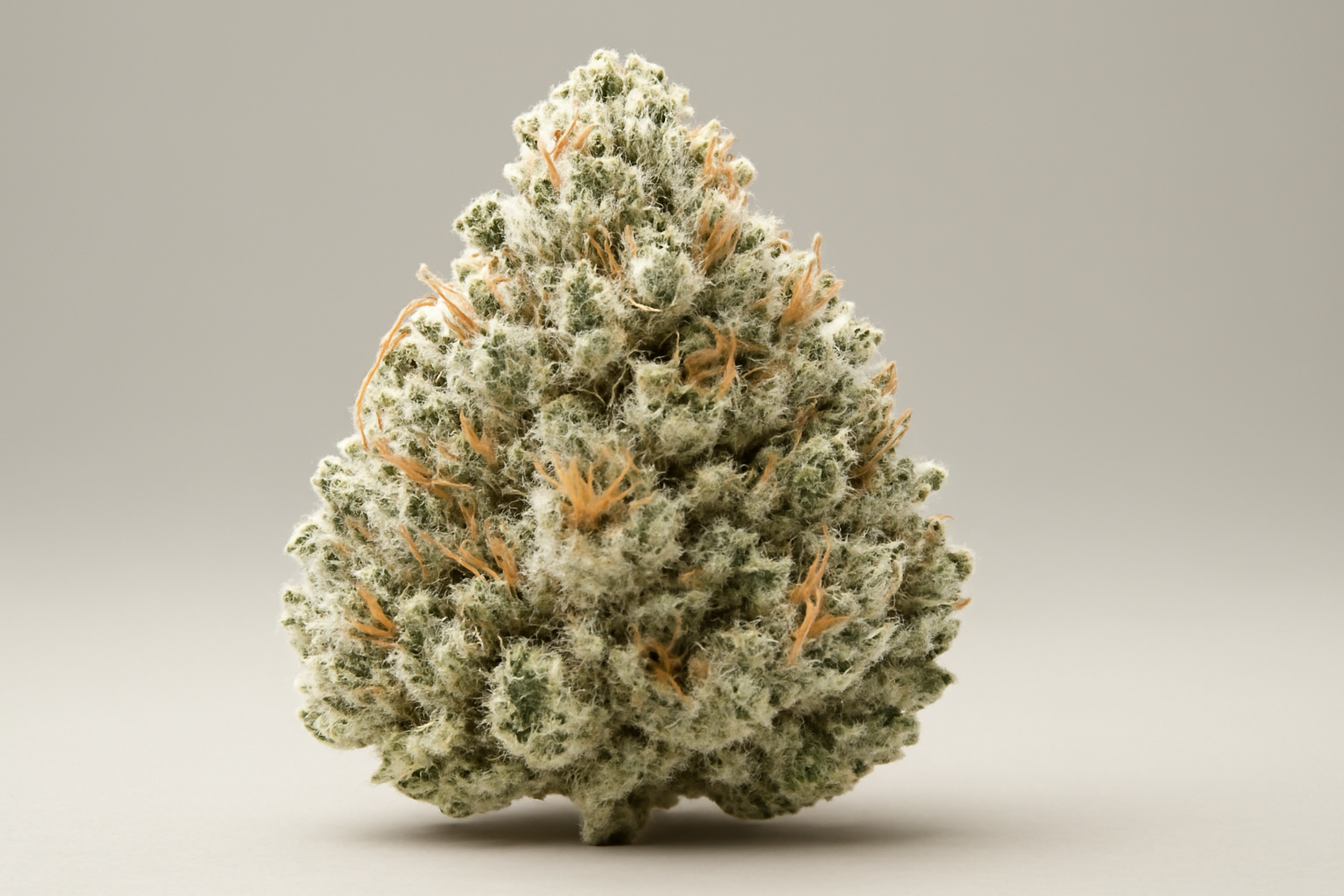
White Widow (Cannabis Strain)
White Widow built its reputation on a classic cross of Brazilian sativa and South Indian indica genetics, a pairing that produces bright lift, deep resin coverage, and a flavor profile that leans piney, spicy, and faintly citrus-driven. It is the kind of strain that stands out the moment the flower is broken open, with a sharp herbal edge underneath its heavy trichome coat.
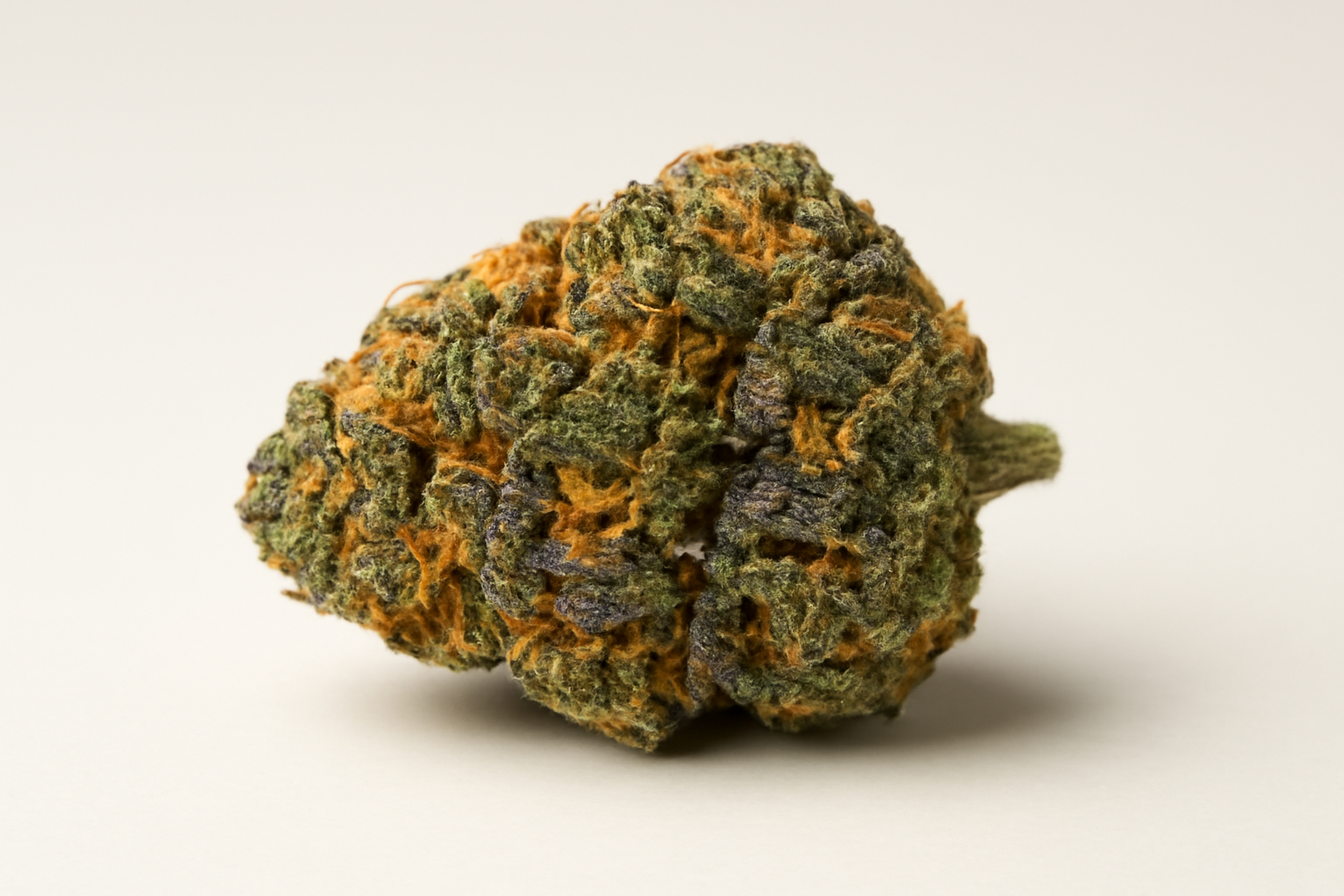
Well-grown examples tend to show chunky buds wrapped in a frosted sheen, often giving the whole plant a silvered look at harvest. The effect profile is usually described as quick to arrive and fairly lively before settling into a calmer body finish, which is one reason White Widow has remained a reference point in dispensary menus and legacy grow rooms for decades.
White Widow Strain Information
| Strain Type | Hybrid |
| Genetics | Brazilian sativa x South Indian indica |
| THC Content | 18% – 25% |
| CBD Content | 0% – 1% |
| Original Breeder | Not clearly documented |
| Flowering Time | 8 – 9 weeks |
Appearance
White Widow typically forms chunky, resin-heavy buds with a frosted look that can make the flowers appear almost silver. The colas are usually medium-dense and rounded, with vivid orange pistils threading through pale green calyxes. Cooler finishes may bring out lavender or pale lime tones, while some phenotypes lean darker and more forest green. Trichome coverage is usually intense and evenly distributed across the sugar leaves and bud surface.
Aroma & Flavor Profile
White Widow opens with a sharp pine-and-earth character, then shifts into pepper, spice, and a faint floral musk as the flower is ground up. On the palate, it often carries a hashy, woody core with brighter citrus peel notes cutting through on the exhale. The finish can feel dry and resinous, which gives the strain a classic old-school profile rather than a sweet dessert-style one.
- Sharp pine
- Earthy spice
- Citrus peel
- Floral musk
- Peppery resin
Effects & Use-Cases (Reported)
Reported effects usually arrive with a quick cerebral spark, often described as clear, upbeat, and slightly buzzy at the front end. As the experience develops, the body effect tends to round things out without flattening the early lift, which makes White Widow a common choice for social settings, creative work, or low-pressure downtime. Potency can feel assertive in stronger examples, so pace matters for newer consumers.
- Fast-hitting
- Uplifting
- Socially engaging
- Creatively stimulating
- Body-relaxing
Cultivation Notes
White Widow is often considered a manageable indoor hybrid with a flowering window that stays relatively short for a resin-rich classic. It usually responds well to topping, low-stress training, and screen-style canopies, though the stretch can vary by phenotype and lean slightly more sativa in some cuts. Good airflow is useful because the buds can stack tightly and produce a thick coat of resin. Outdoor growers generally prefer a warm, stable climate and a dry finish to protect the dense flowers.
- Environment: Indoor / Outdoor
- Flowering Time: 8 – 9 weeks
- Growth Pattern: Moderate stretch with sturdy branching and dense, resinous flower clusters
- Difficulty: Intermediate
Genetic Lineage
White Widow is a legendary cross of Brazilian sativa and South Indian indica genetics. The Brazilian side is often credited with contributing brightness, vigor, and a more energetic top-end character. The South Indian influence is generally associated with dense bud structure, heavy resin production, and a deeper earthy base. Together, those parent lines helped make White Widow one of the most referenced hybrids in modern cannabis.
Frequently Asked Questions
What does White Widow taste like?
White Widow usually tastes earthy and hashy first, with pine, spice, and a faint citrus note on the exhale. The finish is often resinous and woody rather than sweet.
Is White Widow more indica or sativa?
White Widow is generally classified as a hybrid. Its effects and growth traits often reflect a mix of upbeat sativa influence and denser indica structure.
How long does White Widow take to flower?
Most White Widow plants finish in about 8 to 9 weeks of flowering, although specific cuts can vary slightly depending on phenotype and growing conditions.
Why is White Widow called White Widow?
The name comes from the strain’s very heavy trichome coverage, which gives mature flowers a pale, frosted appearance. That white, crystalline look became part of its identity early on.

Leave A Comment